
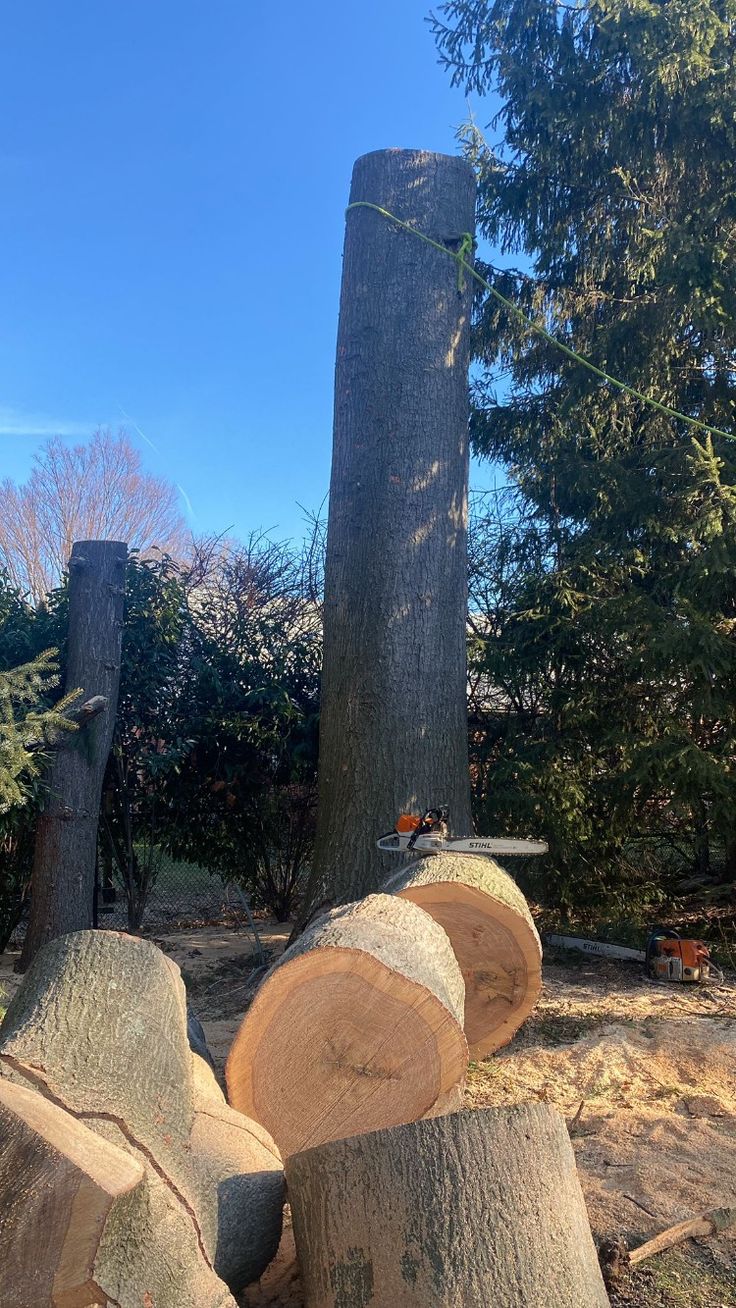
Trees down in pieces.
Nothing hits the house.
We remove hardwoods in Memphis, Germantown and Collierville safely and under control, with the right equipment brought in for the size and setting of the tree.
- Family owned and operated
- Licensed & insured
- Storm calls 24/7
When a tree
needs to come down
Removal is the last option, not the first. These are the situations where pruning stops being worth the money.
Dead or declining
Bark sloughing off in sheets, no leaf-out on a whole side, mushrooms at the base. A dead hardwood keeps shedding limbs until it drops the trunk, and it gets more brittle — and more dangerous to climb — every season it stands.
Storm damage
A split leader, a torn crotch, or half the canopy gone on one side leaves the tree unbalanced and full of hangers. Once the structure is broken it does not grow back into a safe shape.
Leaning toward a structure
New lean, cracked soil, or lifted turf on the far side of the root plate means the anchor is already failing. That is a structural problem, not a cosmetic one, and it does not correct itself.
Root or trunk damage
Trenching, driveway work, or a mower that has hit the flare for ten years cuts off the roots holding the tree up. Hollow trunks and old cavities do the same thing from the inside.
Construction conflict
Additions, pools, new drives and fence lines. If a tree is going to lose most of its root zone to the excavator anyway, taking it out cleanly first is cheaper than losing it slowly afterward.
Outgrew its spot
Silver maples and sweetgums planted six feet off a foundation, or a pine that is now taller than the house it shades. Nothing wrong with the tree — it is simply in the wrong place, and no amount of pruning fixes that.
Rigging
and judgment
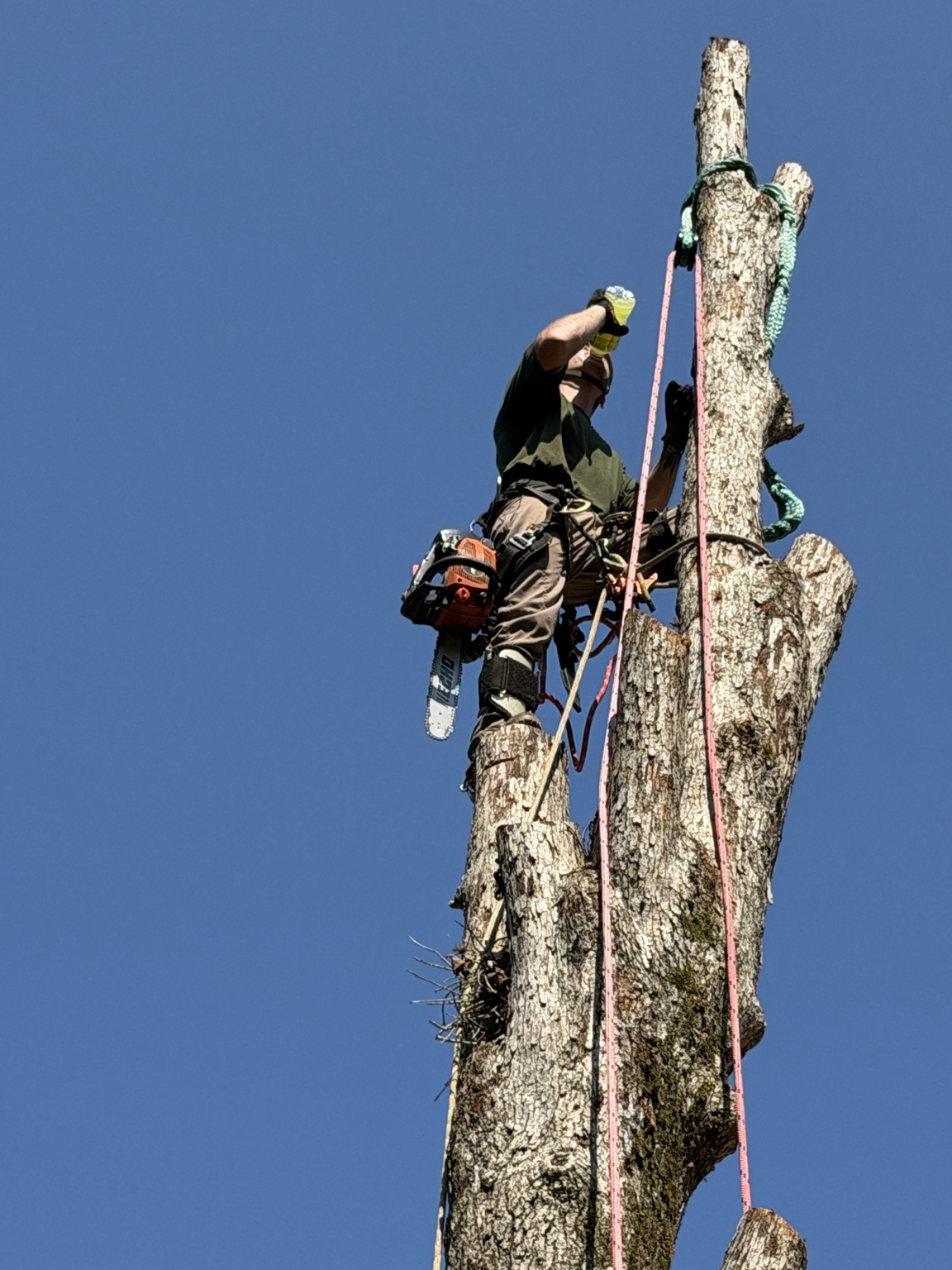
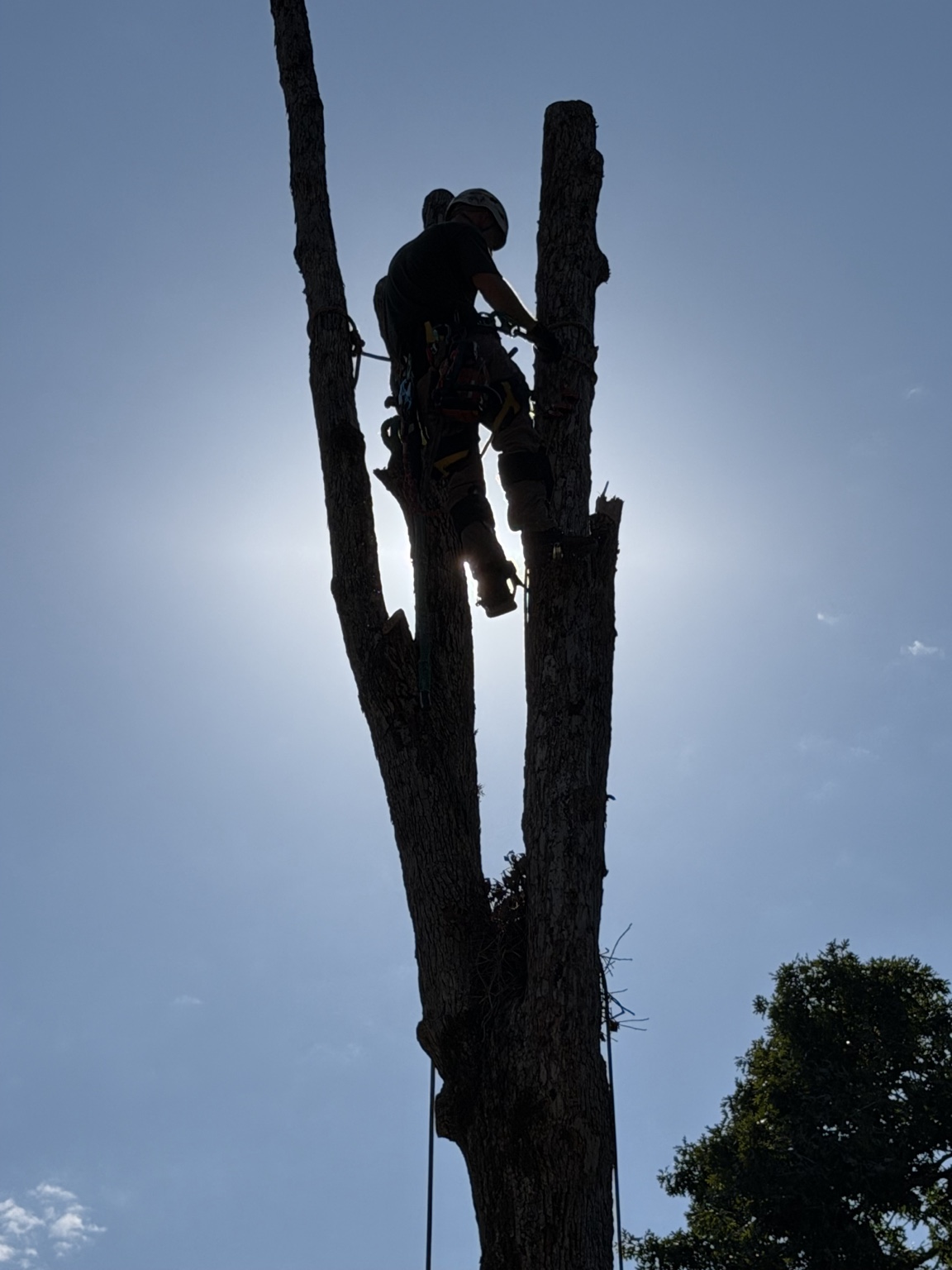
Every removal starts with the same question: where can this safely go? When the answer is nowhere, the tree comes down in pieces — from a bucket truck, from a climber on rope, or off a crane, depending on where the weight sits and what's underneath it.
No two trees or properties line up the same way, so the plan gets built around yours — not a standard approach.
The complicated ones need real rigging: blocks, friction devices, and tag lines controlling where every piece goes. We'll tell you which your tree needs and why. Licensed and insured, and the crew works the same way whether or not anyone's watching.
What actually
drives the price
Two oaks the same height on the same street can quote very differently. Here is what moves the number.
Height and spread
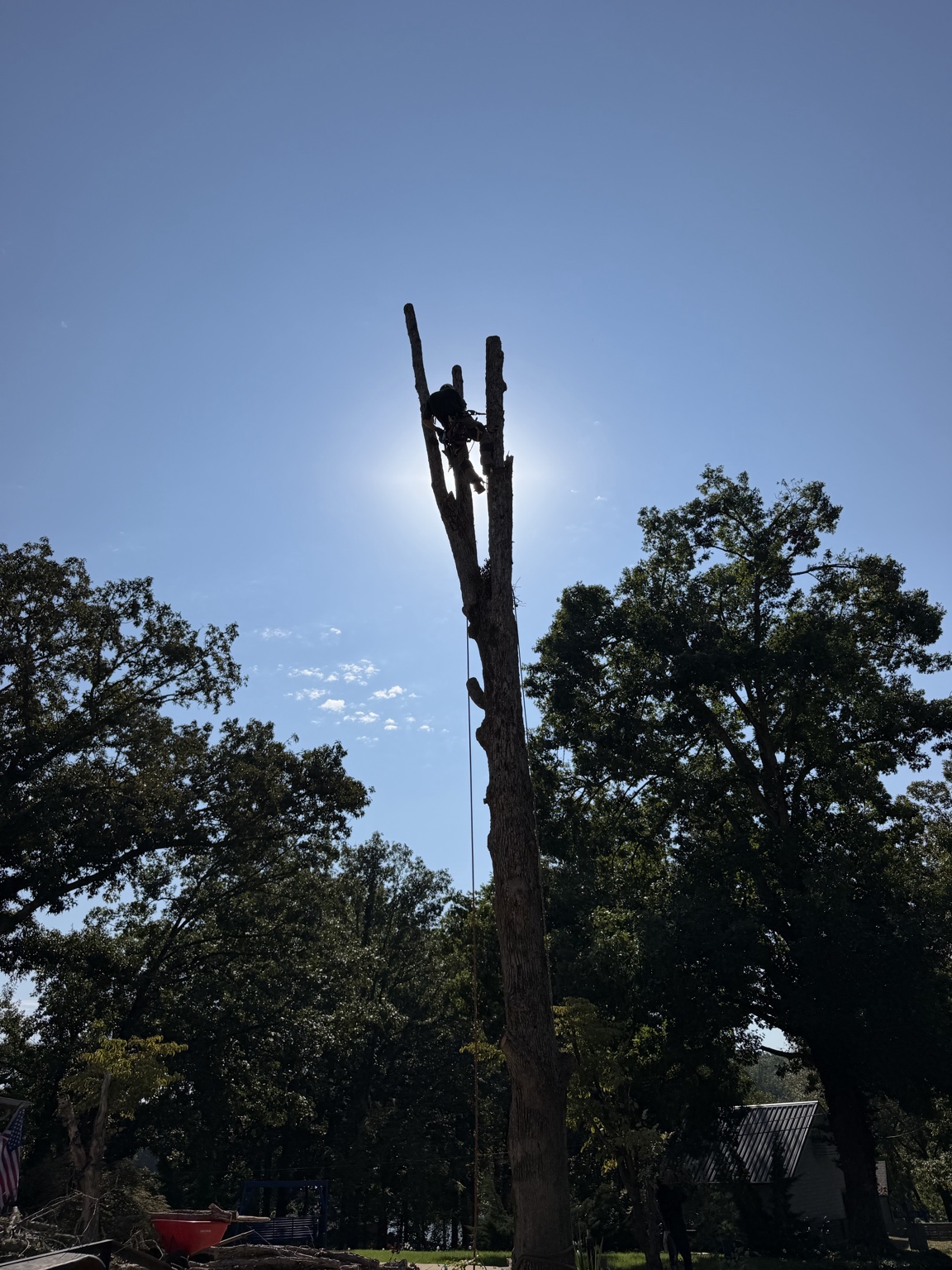
A tall, narrow tree in the open is usually a simpler job than a shorter one with a wide crown over a yard. Size and spread both show up in the price.
Proximity to structures
Distance to the nearest thing that can be damaged decides whether we fell, rig, or bring the crane. Roof, fence, pool, sunroom, power drop, the neighbor's garage — each one adds control we have to build into the plan.
Equipment access
A tree our equipment can park beside is straightforward. A locked backyard with a narrow gate means everything has to move by hand, and that is labor.
Number of trees on site
One tree is a straightforward visit. Multiple trees, or a tree paired with pruning elsewhere on the property, can often be priced together for less than two separate trips.
Stump handling
A flush cut and a fully ground stump are two different prices. Adding it to the same visit costs less than a second trip out.
So the same-size tree in an open Collierville front yard and the one wedged between a Memphis garage and a chain-link fence are not the same job at all. Every quote is written on site, in writing, with the method and the cleanup spelled out.
What we
leave behind
The yard is cleaned up before we leave, and every job comes with the same trust facts behind it.
Yard cleaned up
The yard is cleaned up before we leave. That is the standard on every job, not an add-on you have to ask for.
Estimate in writing
You get the price and the scope in writing before anything starts, so there is nothing to guess at on the day of the job.
Licensed and insured
Every job runs under our license and insurance, family owned and operated, so you are covered from the first cut to the last.
Storm calls answered 24/7
Around Memphis, Germantown and Collierville, storm damage does not wait for business hours, so we answer calls any time it happens.
The trees that come out
around here
Shelby County and north Mississippi grow the same short list of problem trees. These are the calls we run most weeks.
Water oak
Grows fast, hollows from the inside, and drops big limbs with no warning. Common in older Memphis neighborhoods.
Silver maple
Shallow roots lift walks and driveways; brittle unions split in a straight-line wind.
Bradford pear
Planted everywhere in 90s subdivisions. Splits down the middle around year twenty — usually onto a fence.
Sweetgum
Surface roots, gum balls in the mower, and dieback in the top after a dry summer.
Loblolly pine
Thin crowns and a lean after a wet storm. Near a roof or a drive, it is worth a look.
Hackberry & elm
Weak wood, heavy deadwood, and the first ones to shed over a driveway in an ice event.
Signs it is past pruning
- Mushrooms or soft, punky wood at the base
- A fresh lean with cracked soil on the high side
- Deadwood in the top after a full growing season
- A split fork with a seam running down the trunk
- Roots cut for a new driveway, patio or pool
- Carpenter ants or sawdust at the collar
One of these does not always mean the tree goes. We would rather prune a tree you like and keep it standing. If it has to come out, we tell you why and show you the wood.
What people ask
before they book
Do I need to be home during the removal?
No. Plenty of our removals happen while people are at work. We walk the job with you at the estimate, agree on the plan, and text you photos when the crew clears out. If the tree is in a fenced backyard we just need gate access or a code, and if we need to run a hose or plug in we'll ask at the estimate instead of the morning of.
Is my yard cleaned up afterward?
Yes. The yard is cleaned up before we leave, every time. We plan the details with you at the estimate so there are no surprises on the day of the job.
Is the stump included in the removal price?
Not automatically. A removal ends with the trunk cut low and flush; grinding the stump out below grade is separate work with a different machine, so it shows on the estimate as its own line. Doing both on the same visit is cheaper than bringing the grinder back later, so most people add it while the crew is already there.
Will heavy equipment tear up my lawn?
We plan the access before anything rolls in. Plywood goes over driveways and walks, mats go on soft ground, and on a wet week we will move the date rather than rut your yard. If the ground is too soft for equipment, we work the tree by hand instead. Any spot that does get marked up is repaired before we call the job finished.
How far out are you booking?
Normal removals in Memphis, Germantown and Collierville are usually a few days to about two weeks out, depending on whether the job needs the crane. Storm damage moves to the front of the schedule — we answer calls any hour and run those jobs the same day or overnight.
Related
services
Trimming & Pruning
ANSI A300 pruning so the tree recovers instead of growing back wrong.
Storm Damage
A tree on the house, the car, or the driveway. Answered 24/7.
Stump Grinding
Stumps ground below grade so the spot can be planted or mowed over.
Tree Care
For damaged or aging trees that are worth keeping.
Sod Installation
Ground prepped and graded, sod laid, watering instructions so it takes.
Got a tree you'd rather
not think about anymore?
We'll take a look and write the number down. Memphis, Germantown, Collierville and the rest of the route.
Full removals in tight spots and open yards alike. Storm and emergency calls answered 24/7.